Penzances with Wolves

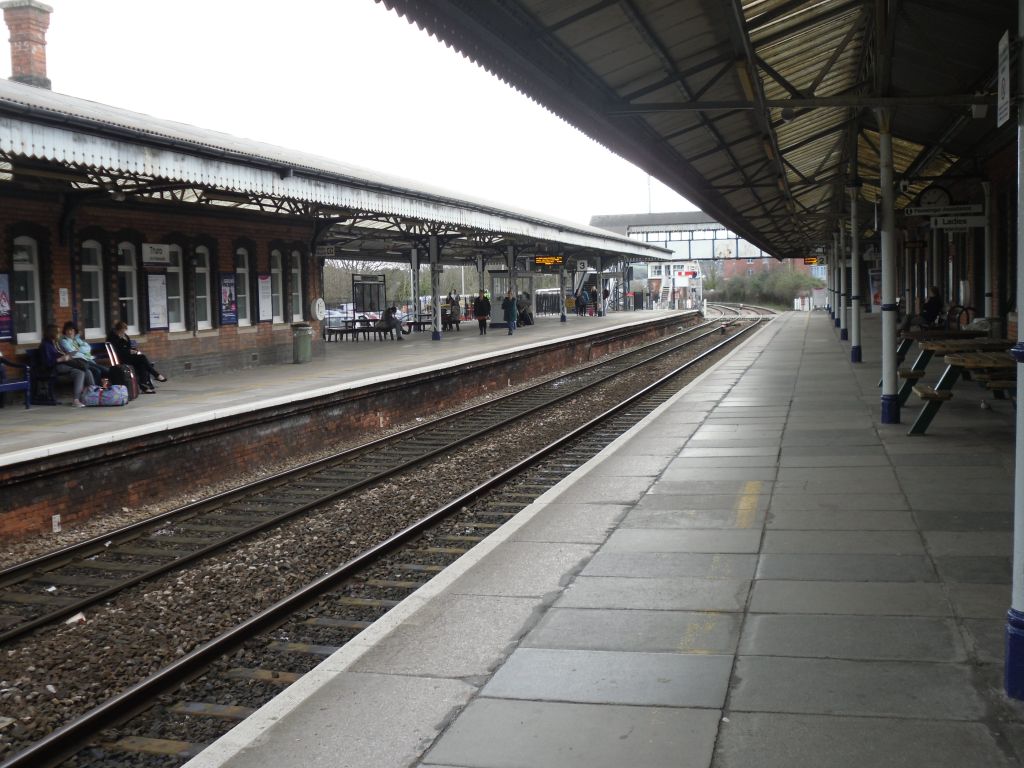
Penzance station platformsI had wanted my entrance to Penzance station to be suitably grand, but my train was the local service from Plymouth, rather than one of the expresses from London. As a result, it was a Sprinter rather than an HST. Shame.

That’s not to say it was an unimpressive experience. After many miles travelling through open countryside, we rounded a curve, passed under a bridge – and suddenly there was the Atlantic Ocean. For the last mile or so the line hugs the coast, so I got to enjoy the sea view for a short time before my train pulled in to Penzance station.

Bay from railway line

Continue reading “Penzances with Wolves”

Knock Your Docks Off

Falmouth Docks station for Pendennis CastleHaving sampled Falmouth’s delights, it was time to head back to Truro, starting from the terminus of the Maritime Line – Falmouth Docks.

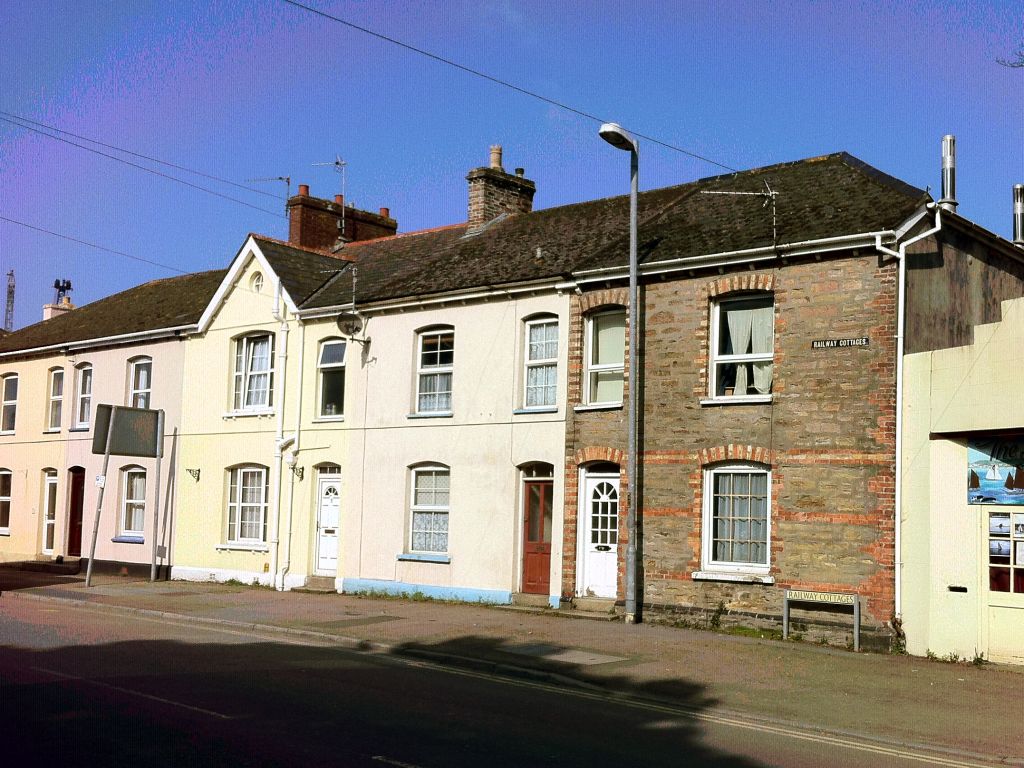
I headed into the eastern end of town, slavishly following the little blue dot on my iPhone Google Maps display. I was a bit concerned that all the road signs seemed to point to dead-end dock access roads, but a row of terraced houses labelled “Railway Cottages” showed that I was heading in the right direction, and a few minutes later I found Falmouth Docks station, tucked away down an unassuming side street.

Railway CottagesA narrow footpath ran between the station and a prefabricated metal building (which turned out to be, somewhat incongruously, an amusement arcade). From this path, by leaning precariously over the railway fence, I was able to get a good shot of the station.

There is a definite sense of faded glory here. At one time, Falmouth Docks boasted three tracks and two platforms, with refreshment rooms and a hotel – not bad for a branch line terminus. Passengers would stream off the trains and onto the packet ships docked in the adjacent harbour. Now, there is just a single track with one platform. The only passenger facility is the canopy, which looks grand but is ridiculously out-of-scale with the two-coach Sprinters that use the station these days.

Continue reading “Knock Your Docks Off”

Money Where Your Falmouth Is

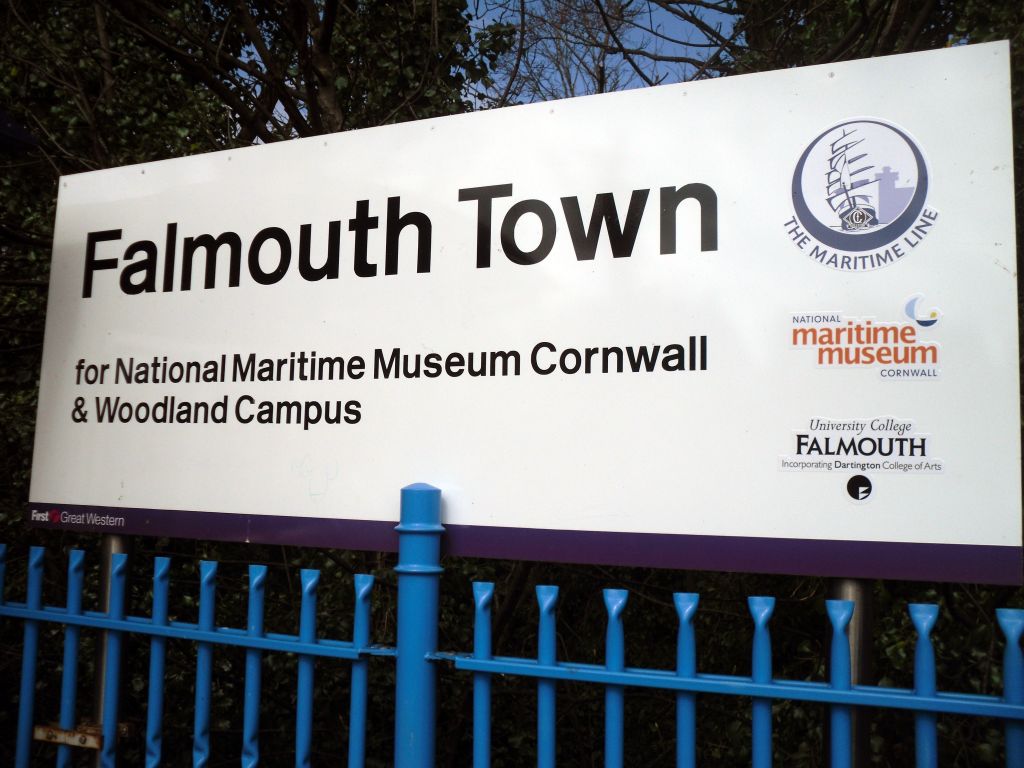
Photo of Falmouth Town station nameboardAfter Penmere, any station was going to be a let down, and the plainness of Falmouth Town certainly brought me back down with a bump.

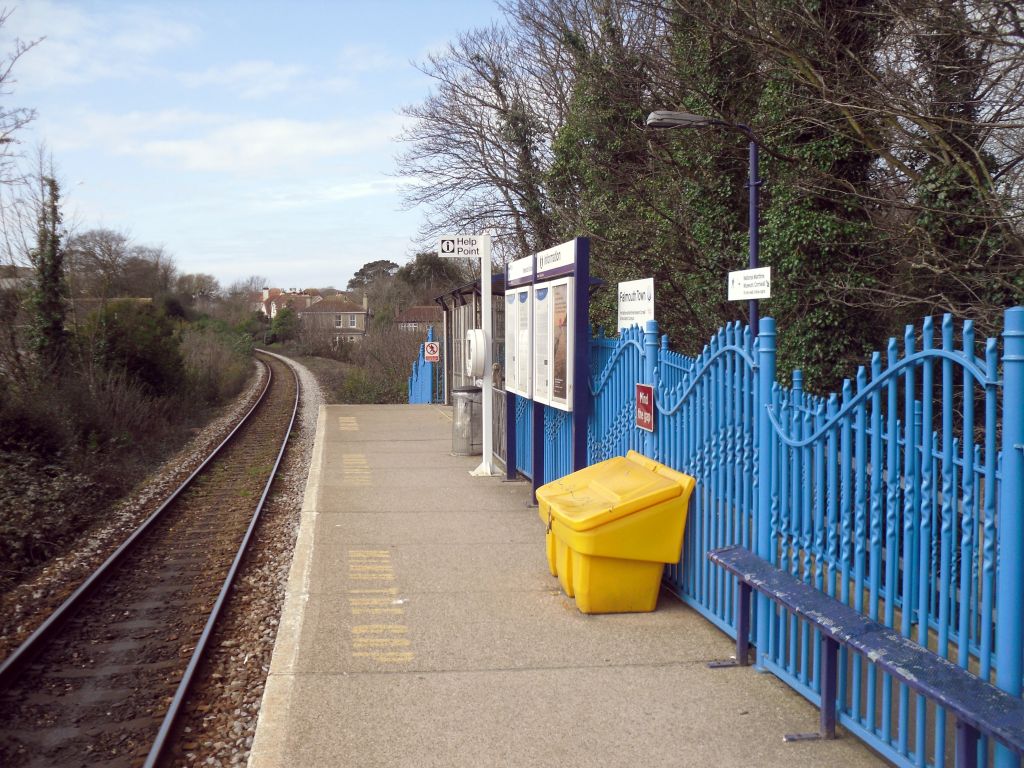
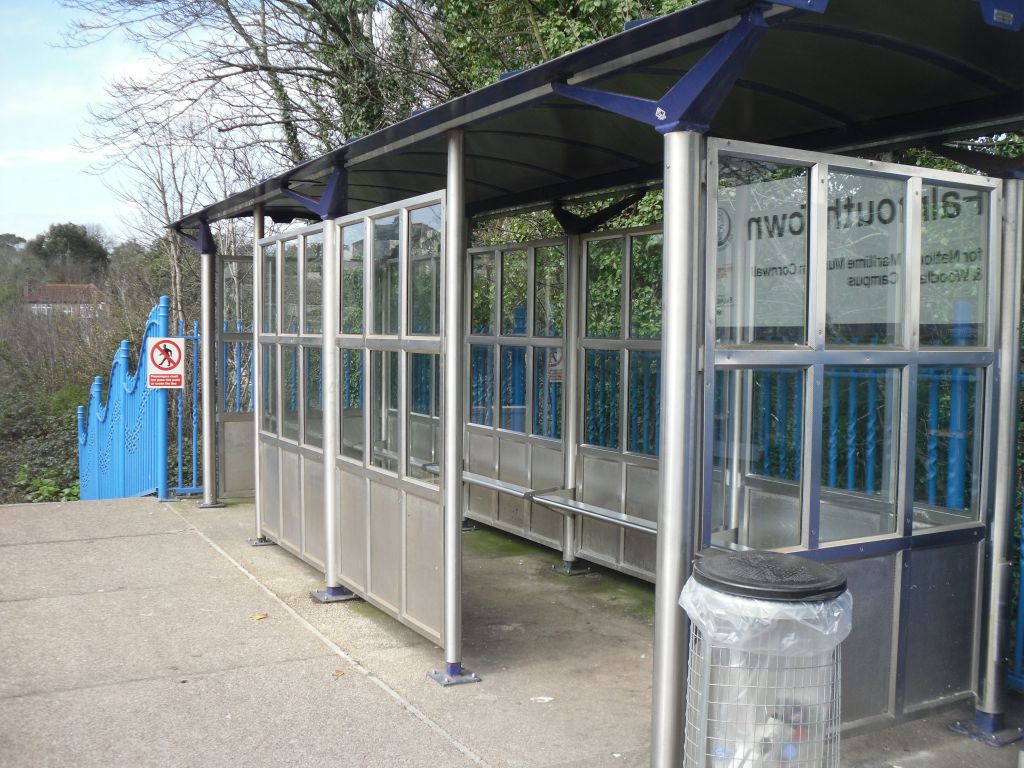
This station opened in 1970, when British Rail noticed that the terminus at Falmouth Docks was in a poor position to serve much of the town. This station, therefore, is the upstart newcomer to the line, a modernity which is reflected in the station architecture. There is a basic waiting shelter on the platform and… that’s it. I do like the “wave” motif on the railings, though.

Photo of Falmouth Town station platformFalmouth Town station shelter

Photo of Robert standing under the Falmouth Town station signThere was precious little of note in the station itself, so I wandered down to the car park where an elderly couple were harrumphing at the lack of facilities (no toilets). I got the required self-portrait, hindered by the sun facing in completely the wrong direction. I was on a busy road with plenty of passers-by to make me feel like a complete tit.

Continue reading “Money Where Your Falmouth Is”

Penmere Mortals

I hopped off at Penmere and watched my train disappear into the distance.

Photo of train leaving PenmereSign reading "Penmere Platform"

Penmere station is right on the edge of Falmouth town itself. At first glance the station is another faux-retro effort, with the old style running-in board and shelter. I’d seen this combination many times already during my brief time in Cornwall, and frankly it was starting to get a bit repetitive. Then I reached the station car park…

Penmere station

Continue reading “Penmere Mortals”

P-p-pick up a Penryn

Station nameboard: "Penryn for Tremough Campus"A man on the train was eating breakfast. Not a croissant or even a bacon butty, mind you, but a full bowl of cereal with milk. There were no tables on board, so he balanced his meal on his lap. As we reached Truro, he neatly packed it all away in a little liquid-proof bag. Full marks for creativity – although personally, I would just get up ten minutes earlier and eat at home.

If he wasn’t embarrassed about eating cornflakes, I wasn’t going to be embarrassed about my station-spotting exploits – even if this included (a) doubling back on myself, travelling back to Truro and staying on the train while it reversed at the terminus, and (b) encountering the same guard whom I’d met at Coombe Junction the previous day. She recognised me, and I ended up having a pleasant (if slightly awkward) conversation with her, where I tried to explain what I was doing. It was difficult because I’m not sure I understand my obsession myself. I didn’t mention the blog specifically, but if she does happen to stumble across this site: hello!

The next station on the line is Penryn – the most important intermediate stop on the line, serving a population of 7,000 people and thousands of students at the nearby Tremough Campus.

Continue reading “P-p-pick up a Penryn”

All’s well that Perranwell

Perranwell station nameboardI was back at Truro station the next morning ready for the 0920 departure down the Falmouth branch – or the Maritime Line, as the marketing people would like you to call it.

My goals were similar to those of the previous day’s Looe Valley roving – visit all the stations on the line. I had carefully done my research prior to coming down to Cornwall, and ascertained that the Maritime Line Ranger would suit my purposes.

Unusually, the booking office clerk did not flinch when I asked for a Day Ranger ticket. What came out of his ticket machine, however, was not a Ranger, but a normal Off Peak Return ticket to Falmouth Docks. I queried this with him.

“The Maritime Line Ranger doesn’t exist any more, but you can use the return like a Day Ranger,” he said. “Just don’t put it in the ticket barrier when you come back here, or it’ll swallow it,” he added helpfully.
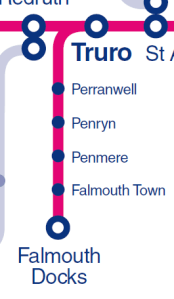
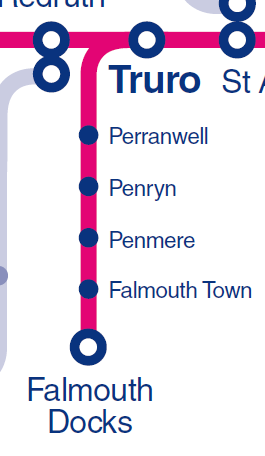
Extract from FGW network map showing Maritime LineWell, that makes perfect sense. Okay then. I suspected this explanation was a lie told to get rid of me – if it was, it worked, because I accepted it and left the ticket office.

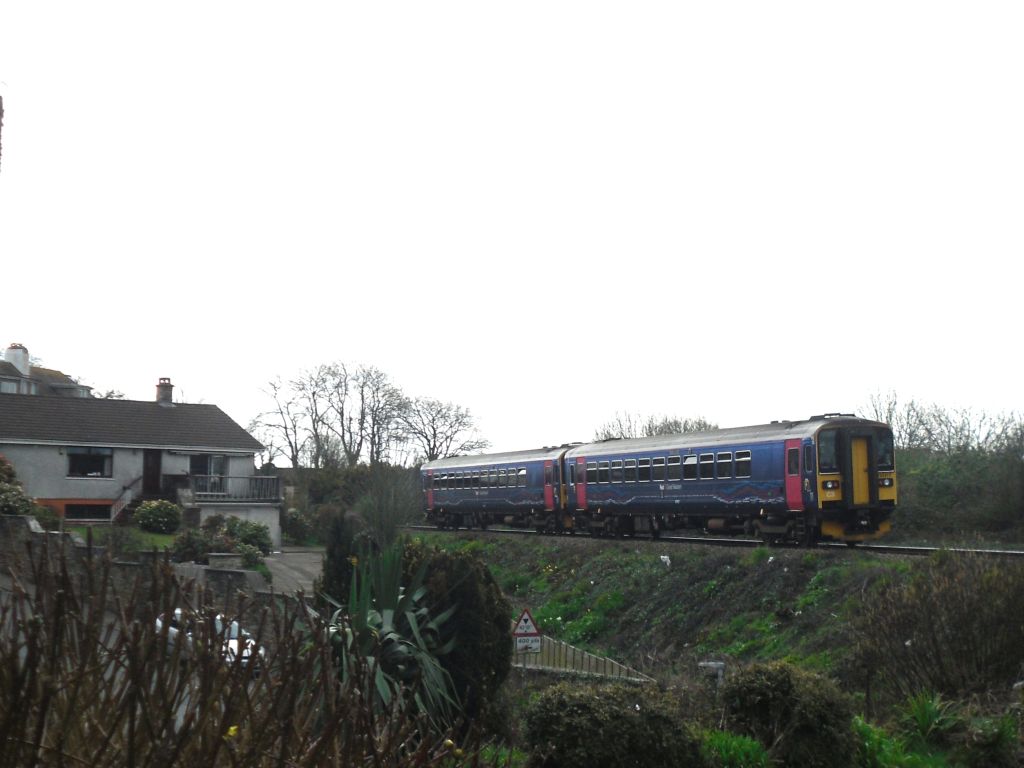
A study of the Maritime Line timetable quickly revealed that I would have no issues with Parliamentary stations or uneven service frequencies today. The Truro to Falmouth Docks line is no meandering, sparsely-served branch – indeed, passengers at stations along this route are surprisingly well-provided for, thanks to recent investment by Network Rail and Cornwall County Council. After many years of an hourly or worse service, train frequency was boosted to two per hour in 2009, when a new passing loop was provided at the halfway point, enabling two trains to operate on the branch at the same time (there’ll be more on this in the next blog post).

One station that hasn’t benefited from the increase in services is the first stop on the line from Truro: Perranwell. Not only does it retain an hourly service, with half the trains on the line skipping the station, but it is a request stop to boot. It was the one awkward spot on the day’s plan, and I was glad to be getting it out of the way early.

Continue reading “All’s well that Perranwell”

Truro-mantics

Truro stationCompared to the ambling Looe Valley Line train, the Cornish Main Line express was positively Shinkansen-like in its speed. The train was running late due to problems in the Exeter area, but we made up a few minutes and 45 minutes later we were nearing Truro.

The approach to Truro is great – the line is on a viaduct, giving a bird’s eye view of the town. With houses and roads far below you, it’s almost like you’re on a plane coming into land. It’s a genuinely impressive sight – so impressive, in fact, that I forgot to take a picture. Oops.

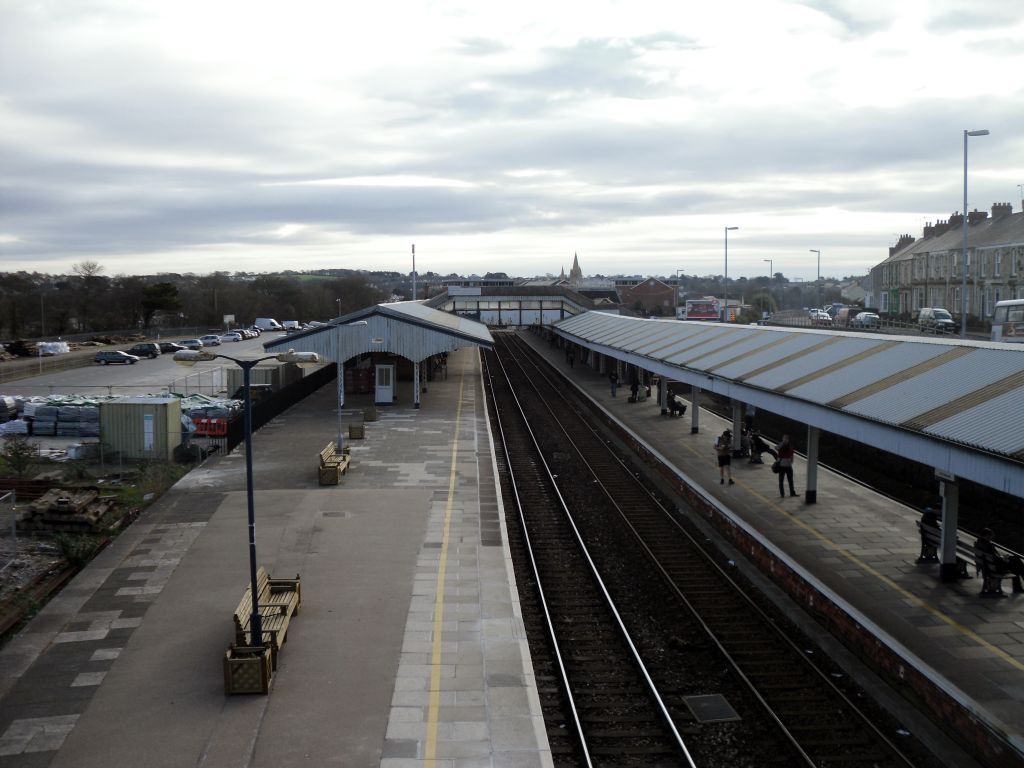
Truro station is fairly standard for an intermediate station on a main line. It’s a functional structure, with two through platforms and a single bay platform at the western end of the station, for the branch line services. There’s a full quota of cafés and shops which seemed to be doing good business.

The station buildings are a bit of a hodge-podge, with a modern frontage bolted on to something much older.

Truro station platformTruro station frontage

Continue reading “Truro-mantics”

Playing the Liskeard

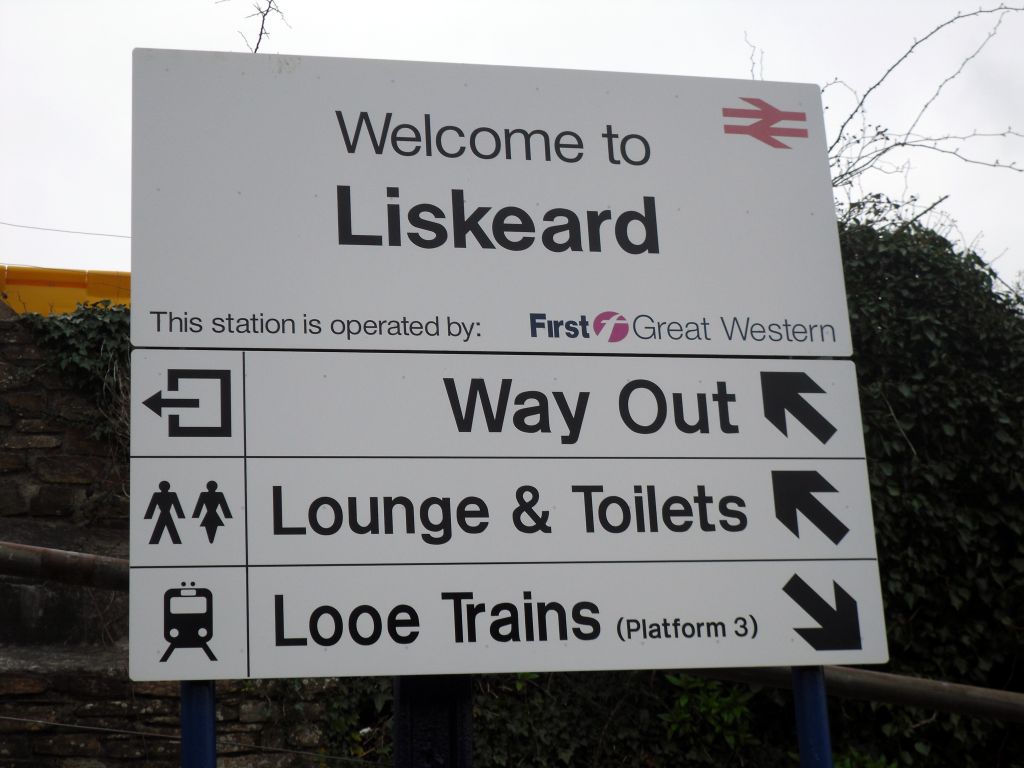
Photo of First Great Western sign "Welcome to Liskeard"The train ambled back north along the Looe Valley Line, taking me back to my starting point, Liskeard (pronounced “Lis-card”, obviously).

No calls at any of those lovely little halts on the way back: Sandplace, Causeland and St Keyne all passed by unnoticed. Then we reached Coombe Junction – no stop at the station this time, the driver and guard donned their high-vis vests, operated the points, changed ends and set off again.

As we headed for the end of the line, the single-coach train had to work hard for the first and only time on its journey. The noise and vibration from the underfloor diesel engine increased noticeably as we attacked the steep gradient. The wheels too, complained bitterly – squealing as they followed the tightly curved track. Finally the din subsided and the train rolled up to the buffers of the branch platform at Liskeard.

Continue reading “Playing the Liskeard”

A trip to the Looe

Photo of "Looe" spelled out with rocks at the stationI decided not to wait for the next train at Sandplace, instead setting off for Looe via the most obvious and direct walking route – the A387 road. This decision turned out to be a slightly life-endangering one, for the road has no safe haven for pedestrians – no pavement, and not even a grass verge for parts of its length. I was forced to walk on the road itself – remembering, of course, the Highway Code’s stern warning to keep on the right so I face oncoming traffic.

The road is quite narrow and features a few blind bends, which didn’t seem to trouble the numerous buses, lorries and the occasional tractor, who zoomed past as quickly as possible. At one point, I saw a police car approach, and I’m pretty sure it slowed down to let the officers inside get a good look at me. Perhaps they had received a report of a lunatic on the road (not altogether inaccurate).

Photo of narrow road leading to LooeThe railway line runs parallel to the road, but at a lower level, and it is largely hidden by trees, greenery, and (according to signs at the roadside) Japanese Knotweed.

I saw a sign declaring Welcome to Looe, and thought my ordeal was at an end, but no – there was another good mile or so of trudging before I finally reached the actual edge of town and the relative safety of an actual, clearly delineated pedestrian walkway.

Roads and walking are bad, kids. Stick to the train.

Continue reading “A trip to the Looe”

Between a Rock and a Sandplace

Photo of Sandplace station nameboardThe Looe Valley Line service is provided by a single train shuttling up and down the branch. I assumed this meant the same train crew would be on duty all day and was prepared to blush a little while explaining my odd obsession to the guard. After all, I had already made myself stand out by boarding the train at Coombe Junction Halt.

As it turned out, the friendly female guard from earlier had disappeared and a different person was now on duty. No conversation required, just a request to get off at the next station. Cringing avoided, for now at least.

Sandplace is the penultimate station on the Looe Valley Line. This one offers quite extravagant passenger provision – not just a waiting shelter in the same faux-GWR style as found elsewhere on the line, but also a small garden with a picnic table. It really is quite lovely.

Photo of Sandplace station platform

Beyond Sandplace, the railway runs onto a causeway with water both sides. It’s an intriguing bit of engineering, which was more or less forced on the line’s builders because of the course of the river along the valley floor.

No time to hang around and study the construction though, as I decided to make way to Looe on foot rather than wait for the next train.

Photo of Robert in front of Sandplace station signPhoto of entrance to Sandplace station

The entrance to Sandplace station is quite unforgiving. Once out of the gate you are immediately on the main road with not even a bit of pavement to protect you. Undaunted, I set off. My first walk, from St Keyne to Causeland, had been quite pleasant, and I assumed that this would be the same. I was wrong…