A trip to the Looe

Photo of "Looe" spelled out with rocks at the stationI decided not to wait for the next train at Sandplace, instead setting off for Looe via the most obvious and direct walking route – the A387 road. This decision turned out to be a slightly life-endangering one, for the road has no safe haven for pedestrians – no pavement, and not even a grass verge for parts of its length. I was forced to walk on the road itself – remembering, of course, the Highway Code’s stern warning to keep on the right so I face oncoming traffic.

The road is quite narrow and features a few blind bends, which didn’t seem to trouble the numerous buses, lorries and the occasional tractor, who zoomed past as quickly as possible. At one point, I saw a police car approach, and I’m pretty sure it slowed down to let the officers inside get a good look at me. Perhaps they had received a report of a lunatic on the road (not altogether inaccurate).

Photo of narrow road leading to LooeThe railway line runs parallel to the road, but at a lower level, and it is largely hidden by trees, greenery, and (according to signs at the roadside) Japanese Knotweed.

I saw a sign declaring Welcome to Looe, and thought my ordeal was at an end, but no – there was another good mile or so of trudging before I finally reached the actual edge of town and the relative safety of an actual, clearly delineated pedestrian walkway.

Roads and walking are bad, kids. Stick to the train.

Continue reading “A trip to the Looe”

Between a Rock and a Sandplace

Photo of Sandplace station nameboardThe Looe Valley Line service is provided by a single train shuttling up and down the branch. I assumed this meant the same train crew would be on duty all day and was prepared to blush a little while explaining my odd obsession to the guard. After all, I had already made myself stand out by boarding the train at Coombe Junction Halt.

As it turned out, the friendly female guard from earlier had disappeared and a different person was now on duty. No conversation required, just a request to get off at the next station. Cringing avoided, for now at least.

Sandplace is the penultimate station on the Looe Valley Line. This one offers quite extravagant passenger provision – not just a waiting shelter in the same faux-GWR style as found elsewhere on the line, but also a small garden with a picnic table. It really is quite lovely.

Photo of Sandplace station platform

Beyond Sandplace, the railway runs onto a causeway with water both sides. It’s an intriguing bit of engineering, which was more or less forced on the line’s builders because of the course of the river along the valley floor.

No time to hang around and study the construction though, as I decided to make way to Looe on foot rather than wait for the next train.

Photo of Robert in front of Sandplace station signPhoto of entrance to Sandplace station

The entrance to Sandplace station is quite unforgiving. Once out of the gate you are immediately on the main road with not even a bit of pavement to protect you. Undaunted, I set off. My first walk, from St Keyne to Causeland, had been quite pleasant, and I assumed that this would be the same. I was wrong…

Rebel Without a Causeland

Photo of single track road between St Keyne and CauselandThe Liskeard to Looe branch was earmarked for closure by Doctor Beeching, but was reprieved just two weeks before the last train was due to run. Reportedly this was because of concerns about the state of the roads in the area, which would have made it impossible to provide a reasonable replacement bus. Walking the road between St Keyne and Causeland stations, I could understand the problem; the single-track road was very narrow. Cars were few and far between, but when one did appear I had to scramble onto the narrow grass verge to let them pass safely.

The road veers away from the railway, leading uphill, past the wishing well mentioned in my previous post, and into a land of trees and greenery. There are isolated farmhouses and a couple of small B&Bs, but little else.

Photo of stream and mini-waterfall gushing into road and down drainAt one point the road crossed a stream. Rather than build a bridge, the water was apparently left to just gush into the road and then down a nearby drain. That isn’t something you see every day. Unless of course you live here.

I was a little concerned about getting lost, but there was only one point on the whole walk where I was faced with a choice of paths to follow, and even then the decision was obvious: I took the road which led back down to the valley floor. My decision was proved correct when the trees thinned out and I could see the railway line again. A few minutes later I saw the signpost for Causeland station.

Continue reading “Rebel Without a Causeland”

St Keyne as Mustard

Station nameboard and information posters at St KeyneJust a few minutes after getting on the train at Coombe, it was time for me to alight again, as we pulled into the next station on the Looe Valley Line. I actually waved goodbye to the guard as the train departed, a level of friendliness from me which is quite abnormal. It must have been the country air.

I was at St Keyne Wishing Well Halt, a station name which could have come straight out of an Enid Blyton novel. I half expected to see a load of kids with amusing names like Dick and Fanny, along with several unpleasant racial stereotypes.

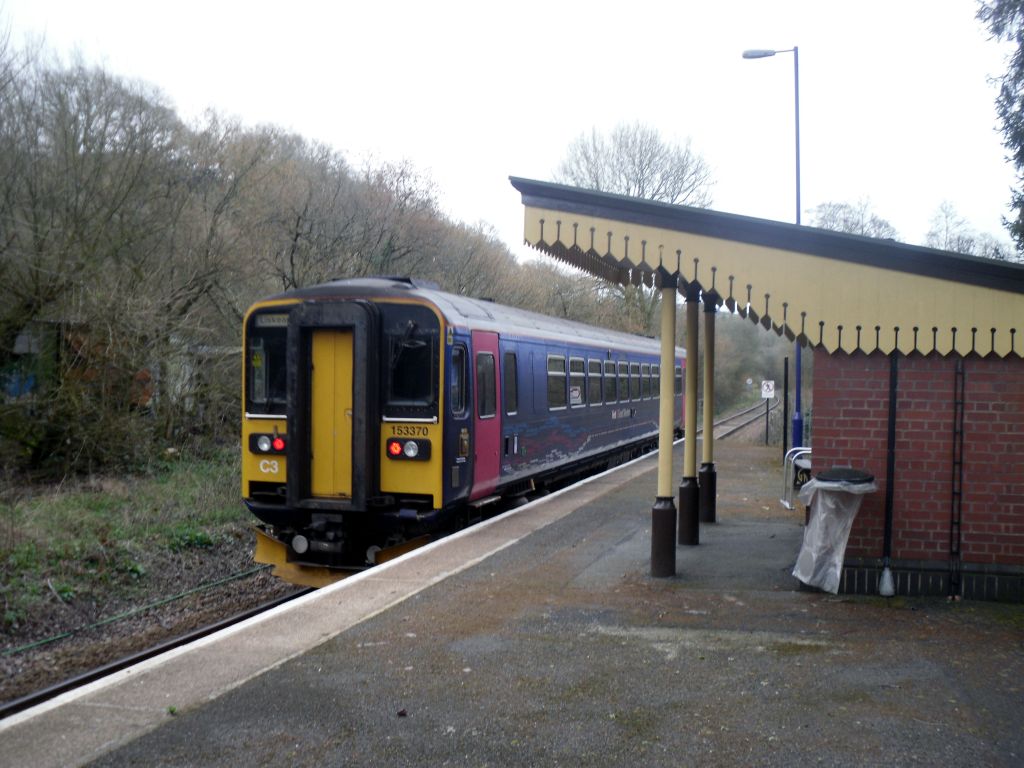
Photo of Class 153 train departing St Keyne“Halt” is a railway term which has fallen into disuse. In times gone by it signified a station with no staff and only rudimentary passenger facilities. Of course, nowadays that description applies to half the stations on the network, so the word is usually unnecessary. St Keyne is one of only two stations on the whole National Rail system which still has the suffix applied. I can’t remember where the other one is.

St Keyne is certainly a simple station, but it’s clean, tidy and ample for the handful of passengers who use it. Even without the name, it would be a charming place, helped no end by the copious use of Gill Sans on the replica signage, and the Great Western Railway emblem embedded in the metalwork of the bench on the platform. Continue reading “St Keyne as Mustard”

Strictly Coombe Dancing

Signpost pointing to the Looe Valley Line stationTuesday morning, the first proper day of my holiday. After a peaceful night’s sleep in a comfortable Premier Inn bedroom, I was ready and raring to go.

It’s very easy to get up at 7am when I know I don’t have to go to work. I was showered, dressed and scoffing a Cornish breakfast in the hotel dining room within 30 minutes of my alarm going off. Then it was into a taxi which carried me through the narrow streets of Liskeard, nearly coming a cropper when the driver decided to take a shortcut, only to find his road completely blocked by a bin lorry which showed no signs of moving. One hasty reversal later and we were soon at Liskeard station.

I went to the ticket office where the clerk was flustered by an elderly couple wanting to book Advance tickets with Disabled Railcard discount for a future journey to Paddington. She was equally bewildered by my request for a Looe Valley Explorer ticket, but eventually found it on her computer. She admitted that she was new to the job. Happy to provide the baptism of fire.

Continue reading “Strictly Coombe Dancing”

Cornish Patsy

I spent much of last week in Cornwall, exploring some of the lovely branch lines and the surrounding area. It was a lovely experience: great scenery, comfortable hotels, friendly people and (of course) lots of stations.

Montage of station signs: Sandplace, Truro, Falmouth Town, Penzance, Causeland, St Ives, Coombe Junction Halt, Carbis Bay, Lelant, Penryn, Liskeard, Penmere, Perranwell, St Keyne Wishing Well Halt, St Erth, Lelant Saltings, Falmouth Docks, Looe

The good news is I have eighteen new stations to write up for this blog. I will be doing that over the coming days and weeks, but in the meantime, you might enjoy my account of my trip on the Night Riviera sleeper train, which I have written up over on my personal blog.

Burscough No Go

Photo of Burscough Bridge Station Sign, mentioning Martin Mere Wetland CentreRecently I found myself in Burscough with an hour to kill. While I was waiting, I wandered the mean streets. Burscough is a small but pleasant town, with a pleasant high street of independent butchers and bakers (how long they will survive the presence of a giant Tesco nearby remains to be seen).

A quirk of railway geography has resulted in Burscough being provided with two stations on different lines, and my wanderings led me to the more important of the pair: Burscough Bridge. I had heard there was a café there and thought I might be able to combine coffee with Pacer-watching.

This should be considered very much a bonus station, outside the usual blog remit. For starters, it is not in any way a “limited service” station – in fact it is blessed with a half-hourly service between Southport and Manchester for most of the day. Secondly, I did not arrive or leave by train or official rail replacement bus. Finally, I didn’t get a photo of myself under the station sign (because I forgot, to be honest).

Continue reading “Burscough No Go”

Stone the Crows

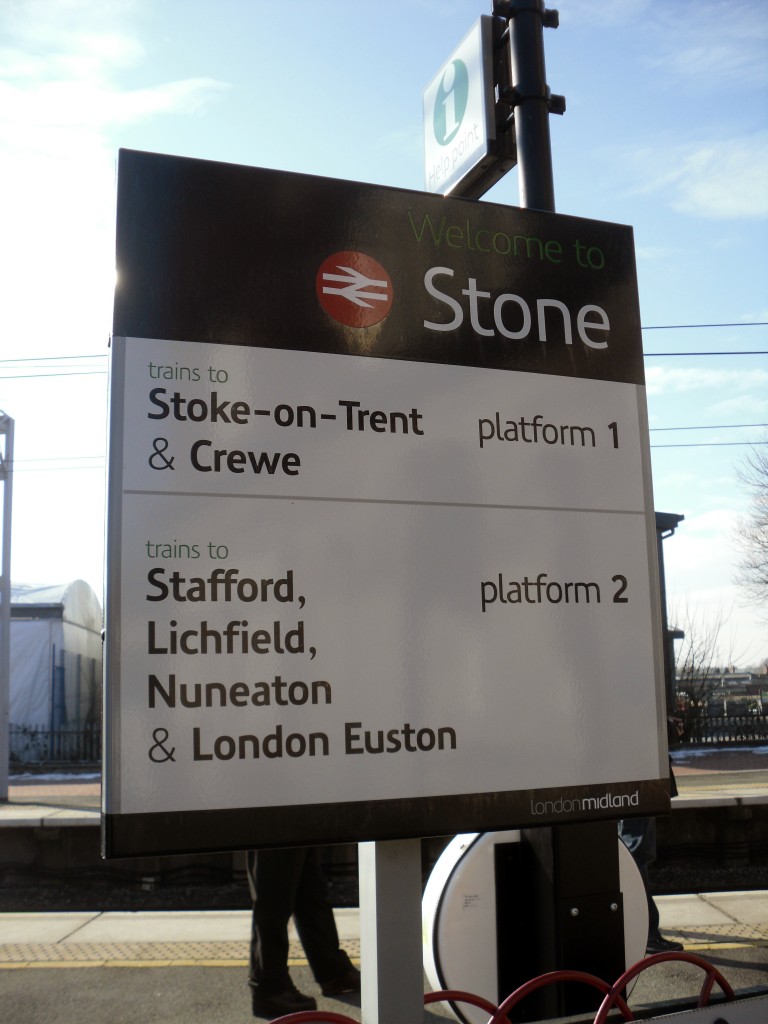
Welcome to Stone sign at entrance to platformTo get from the desolation of Norton Bridge to the nice-but-trainless Barlaston, Ian, Scott and I had to travel via Stone. This small market town is halfway between Stafford and Stoke, so we had to get the bus back to Stafford for a train onward.

Yes, an actual train. Stone lies on the same stretch of line as Norton Bridge, Barlaston and Wedgwood, but there is a happier story to tell here. While Stone lost its trains in 2004 along with the other stations, the bustitution here was short lived, as London Midland included the stop on their new Crewe to Euston stopping service which launched in December 2008.

Travelling from Stafford we passed through the weed-encrusted platforms of Norton Bridge again, this time at track level, arriving in Stone just a few minutes later. A good number of people got off the train with us. The station has already regained its popularity – over 48,000 people used it in 2009, the first year of the new service.

Continue reading “Stone the Crows”

Wedgwood Jesus Do?

Photo of Wedgwood station sign, at an odd angleAfter Barlaston, our next and final station – Wedgwood – was just a short distance away. Ian suggested we walk there using the towpath of the canal, which runs parallel to the railway line.

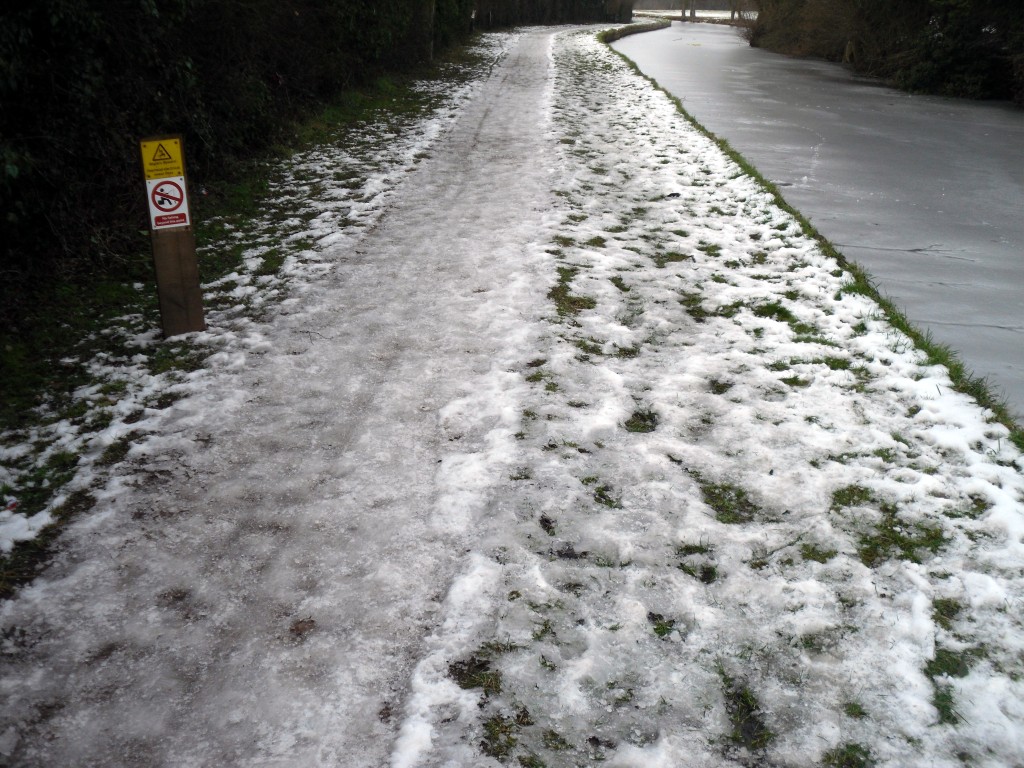
A few minutes in, we realised this was a bad decision. We were in the middle of a cold snap, and while the roads and pavements in Barlaston itself had been mostly clear of snow and ice, the towpath was shaded from the feeble sun by trees and hedges, leaving it in a decidedly treacherous state. Slipping on ice is never a dignified way to get injured, and it’s even less appealing when there is a body of freezing water adjacent.

Photo showing iced-over canal towpath in BarlastonWe pressed on, walking on the grass verges in parts where the towpath was just too dangerous. We passed a few other hardy souls, mostly dog-walkers (judging by the amount of excrement we dodged, this is a popular dog-walking route). There were alarming signs at regular intervals, warning anglers to avoid this stretch of canal, lest their rods get tangled in the overhead power cables strung in the adjacent field.

The sereneness was disturbed every few minutes by trains roaring past – an assortment of Pendolinos, Desiros and Voyagers. The frequency of services on the busy Manchester to Stafford line is such that the local service has been squeezed out of the timetable, leaving Wedgwood, like its neighbour Barlaston, without a train service.

Continue reading “Wedgwood Jesus Do?”

Barlaston-ished

Photo of tatty station nameboard for BarlastonAfter returning to Stafford and catching a train to Stone (of which more later), our next stop was Barlaston. Again, this would require the use of a rail replacement bus – this time, the BakerBus X1 service. In a prime example of joined up transport, this service departs from the opposite side of Stone to the railway station it supposedly connects with.

The bus turned up a few minutes late. I got on board and waved my train ticket at the driver, but he called me back before I could take a seat.

“Where are you going?”
“Pardon?”
“I said, where are you going to?”
“Er, Barlaston?”
“Oh, OK. I was just checking!”

He muttered something about “just getting on without saying anything”. Fair enough – I’m used to big city buses where any communication between passenger and staff is frowned upon.

We headed out of Stone on a wide dual carriageway, but true to form this did not last long, as we turned off and headed up another narrow country lane. A few minutes later we pulled up at Barlaston, with the driver wishing us a cheery goodbye as we alighted.

Continue reading “Barlaston-ished”